 pick a feature
ProductLift vs pick a feature: Honest Comparison (2026)
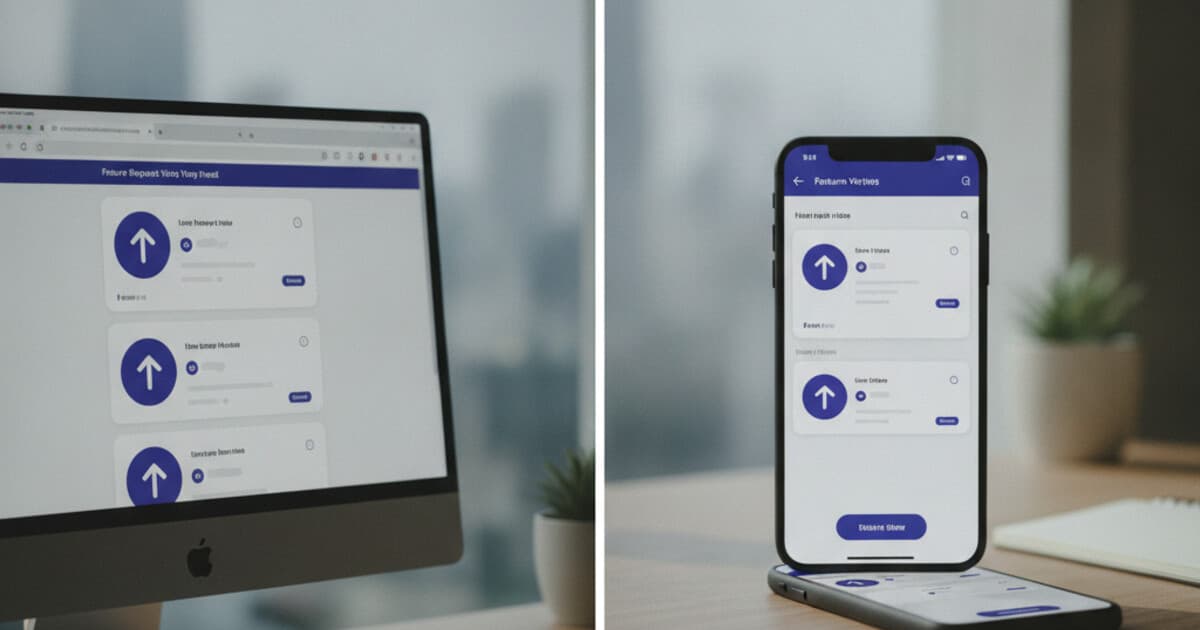
You're building a Flutter app and you want users to vote on what gets built next. Two tools come up in the research: ProductLift and pick a feature. Both collect feature requests and let users upvote ideas. After that, they take very different paths.
ProductLift is a standalone web portal with a public roadmap page, a changelog, and integrations like Slack and Linear. pick a feature is a Flutter SDK that drops a native voting widget inside your app with a few lines of Dart code. The right choice comes down to your tech stack, the user experience you want around feedback, and how much you're willing to spend per month.
Here's what each tool actually does, what it costs, and which one fits your situation.
ProductLift is a web-based feature voting portal with a public roadmap page, a changelog, and integrations including Slack, Linear, and Zapier. pick a feature is a Flutter SDK that adds native in-app voting to your Flutter app with a one-line initialization. For Flutter developers, pick a feature delivers an in-app experience at $5/month versus ProductLift's web portal approach starting around $25/month on paid plans.
What Is ProductLift?
ProductLift is a hosted platform for collecting and managing feature requests. Users visit a web portal (or interact with an embedded widget on your site) to submit ideas and vote on existing ones. You manage requests from a dashboard, then move them through your own workflow.
The product goes beyond basic voting. ProductLift includes a public roadmap URL your users can bookmark, a changelog for announcing shipped features, and integrations with Slack, Linear, and Zapier so new submissions route into your team's existing tools automatically. You can also white-label the portal on higher plans and share a branded URL like feedback.yourapp.com.
Pricing sits around $25/month on the Starter plan, with a free tier that caps the number of tracked ideas. The free tier covers early-stage validation, but most active products hit that cap within the first few months of serious user engagement. Higher tiers unlock more portals, more seats, and white-label options.
ProductLift works for any web SaaS regardless of tech stack. That breadth is a real strength if you're running something outside Flutter, but the tool doesn't go deep on mobile or native SDK integration.
What Is pick a feature?
pick a feature is a Flutter SDK paired with a cloud dashboard. You initialize it with one line of Dart:
PickAFeature.initialize(apiKey: 'your-api-key');
Then drop in a pre-built widget wherever you want users to see the feature request board. Three UI options are built in: a full-screen view, a dialog, and a bottom sheet. All three are styled and functional out of the box. Theming takes one config object (primary color, background color, border radius, custom copy).
The SDK handles user identity without requiring sign-in. Signed-in users get identified by email, name, or custom user ID. Users who skip sign-in get a device UUID stored in shared_preferences, so their votes persist across sessions. Anonymous voting works by default.
The dashboard is where moderation happens. You approve requests, reject spam, and move items through a six-stage status workflow: pending → under review → approved → in progress → planned → completed. Only approved and completed items show in the SDK widget, so users see a clean list instead of an unmoderated pile of suggestions.
Pricing: the free tier includes 1 project and 10 feature requests with no card required. Starter is $5/month for 3 projects and unlimited requests. Unlimited is $15/month for unlimited projects, unlimited requests, and advanced analytics.
ProductLift vs pick a feature: Core Differences
The most useful lens for comparing these two tools is where users interact with your feedback system.
ProductLift puts users on a web page. To submit a request, your users leave your app, open a browser, navigate to a portal URL, and submit there. For web SaaS products where users are already in a browser, that flow is natural.
For mobile Flutter app users, it adds real friction: open a browser, load the portal, submit, then switch back to the app.
pick a feature puts users inside your app. The widget opens as a bottom sheet or dialog without leaving the Flutter context. A user sees a "Request a feature" button in your settings screen, taps it, sees the existing list, upvotes something or types a new idea, and closes it. The whole interaction happens inside your app in under 30 seconds, with no app-switching or browser loading required.
This matters for submission rates. In-app prompts catch users at moments of natural engagement: right after they tried something and wished it worked differently, or while exploring a screen and realizing a feature is missing. Web portals depend on users being motivated enough to seek out a separate URL after the fact, when the moment of frustration has already passed. For Flutter developers shipping mobile or desktop apps, native in-app collection typically drives more submissions from a broader slice of your actual user base than a web portal they'd have to find, remember, and visit on their own.
The integration side also differs. ProductLift connects to Slack, Linear, and Zapier, so new submissions can appear in your team's workflow automatically. pick a feature sends email notifications for new requests but doesn't have third-party integrations. If your team lives in Linear, ProductLift's integration reduces manual dashboard-checking.
ProductLift also has a public roadmap page and a changelog. pick a feature has neither. If a shareable roadmap URL or a shipped-features announcement is part of your product experience, ProductLift wins that category.
Pricing Compared
| Feature | pick a feature | ProductLift |
|---|---|---|
| Free tier | 1 project, 10 requests | Yes (limited ideas) |
| Starter paid plan | $5/mo | ~$25/mo |
| No card for free | Yes | Depends on plan |
| Flutter SDK | Yes | No |
| Public roadmap | No | Yes |
| Changelog | No | Yes |
| Slack/Linear integration | No | Yes |
| Unlimited projects | $15/mo | Higher tiers |
The pricing gap is significant for indie budgets. pick a feature's Starter plan at $5/month is one-fifth of ProductLift's entry paid tier. When you're six months into building and haven't monetized yet, that's a real number.
pick a feature's free tier is also genuinely usable, not a bait-and-switch trial. One project, 10 feature requests, email notifications, and full moderation tools. Most solo apps stay on free for the first few months while they're figuring out whether users actually engage with the feedback board at all. If you want a broader look at how free tiers compare across the space, the free feature request tool roundup covers several options side by side.
ProductLift's free tier has its own limits (a cap on tracked ideas), so you'll hit the ceiling faster if your app has active users submitting ideas. Upgrading to $25/month is a bigger jump than going from free to $5/month on pick a feature.
Who Should Use Each Tool
ProductLift fits better if:
- Your tech stack is web-based, not Flutter
- A public roadmap page with a shareable URL matters for your product
- Changelogs and shipped-feature announcements are part of your product experience
- Slack or Linear integration is important for your team's workflow
- Budget allows $25+/month for a dedicated feedback tool
pick a feature fits better if:
- You're shipping a Flutter app (iOS, Android, web, or macOS)
- In-app collection matters: users shouldn't leave the app to submit feedback
- Budget is tight — you're indie or bootstrapped and paying per-tool out of pocket
- Shipping in an afternoon beats building custom backend infrastructure
- A free tier with no card required fits your current stage
If you're comparing to a similar web-portal tool, the Sleekplan vs pick a feature comparison covers a lot of the same territory: web portals vs native SDK, and why the distinction matters for Flutter developers.
How pick a feature Works in a Flutter App
Setup takes one session. Add the pickafeature package from pub.dev to your pubspec.yaml, call PickAFeature.initialize at app start, then place a widget trigger wherever makes sense in your UI: a settings screen, a help menu, or a floating button.
Users see the feature request list inside the app, vote on existing ideas, and submit new ones with an optional email field. The widget shows only approved and completed requests, so the list stays relevant. You control what makes it through from the dashboard.
The feature request voting process in pick a feature is one vote per user or device. Signed-in users are tied to their account. Anonymous users are tied to their device UUID. Both persist across sessions, so vote counts stay meaningful.
If you want to test the widget before connecting real data, demo mode loads canned requests with no network calls. Good for screenshots, QA flows, and testing UI states without touching production data.
The SDK also supports a custom apiBaseUrl, so you can point it at your own backend if you want to self-host. That's unusual for a managed SaaS feedback tool, and it's there for teams with specific data residency requirements.
Frequently Asked Questions
Does ProductLift have a Flutter SDK?
ProductLift doesn't have a native Flutter SDK. It works through a web portal or an embeddable web widget, which means users leave your app or interact through a web view. pick a feature is built as a Flutter package with native widget support, cross-platform across iOS, Android, web, and macOS.
Can pick a feature show a public roadmap page?
pick a feature doesn't have a shareable public roadmap URL. Feature requests live inside your app. ProductLift offers public roadmap pages and a changelog if that's a requirement for your product or your marketing site.
What happens when a free pick a feature account hits 10 requests?
Once you've collected 10 feature requests on the free tier, you'd upgrade to Starter ($5/month) to collect more. The existing requests and all votes stay intact. Most active apps hit this limit within the first month or two.
Which tool is faster to set up for a Flutter developer?
pick a feature is faster if you're in Flutter. Add the pub.dev package, call PickAFeature.initialize, drop in a widget. You can ship it in a few hours. ProductLift requires setting up a portal, getting users to a web URL or embedding a web widget, and connecting your workflow tools.
Does pick a feature work for React Native or web apps?
pick a feature is Flutter-only. A React Native SDK is on the roadmap but not live yet. For React Native or web apps, ProductLift and other web-native tools are the right fit.
The Bottom Line
ProductLift and pick a feature solve the same problem from different angles. ProductLift is a fuller-featured web platform with a public roadmap, changelog, and third-party integrations. pick a feature is a Flutter SDK focused on in-app feature voting at a fraction of the price.
For Flutter developers, the in-app experience pick a feature delivers is hard to replicate with a web portal. Users stay in your app, submission rates stay higher, and setup takes an afternoon instead of a week. The $5/month Starter tier means you're not making a significant financial commitment to test whether it works.
If you're building a Flutter app and want your users to tell you what to build next, pick a feature handles the whole thing in-app for less than a coffee per week.