 pick a feature
Best Free Feature Request Tools in 2026 (That Are Actually Free)
Most feature request tools call themselves free. Most of them aren't, not past the first 14 days. Canny dropped its free plan entirely in late 2024. Featurebase runs a trial with a billing prompt at the end. Frill requires a paid subscription for any ongoing use.
If you're building an indie app or a side project and you want to collect feature requests from real users without paying anything yet, the list of tools that actually stay free is short. This guide covers what that list looks like in 2026, what each tool includes, and when it makes sense to upgrade.
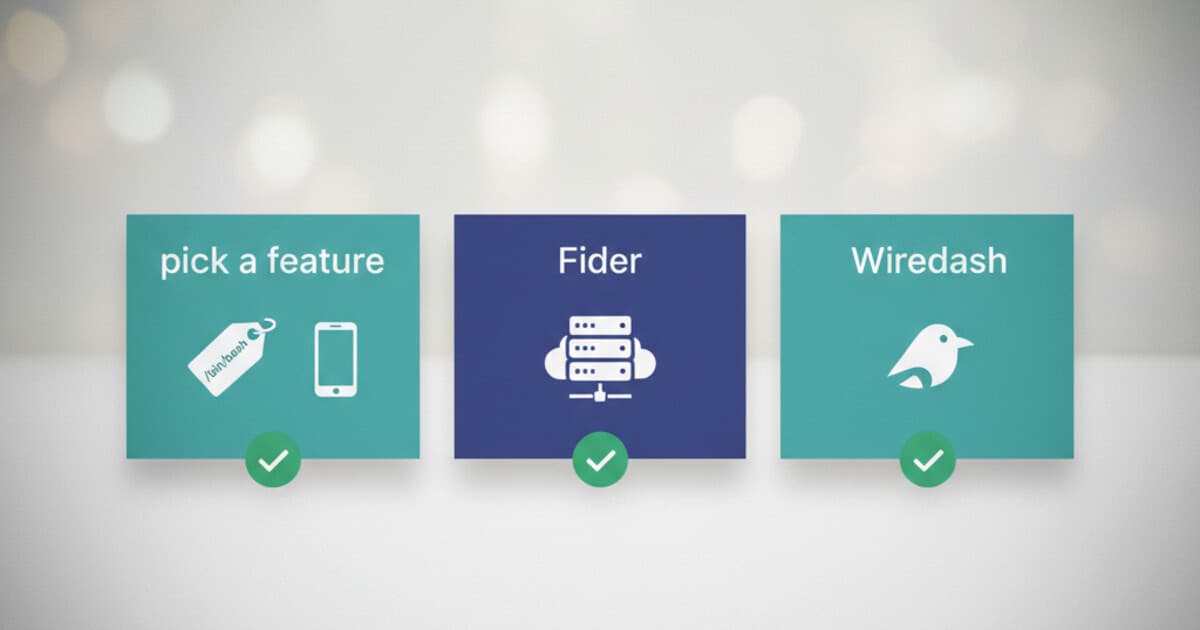
The best free feature request tools in 2026 are pick a feature (genuine free tier: 1 project, 10 requests, no credit card, no expiry), Fider (open-source and self-hosted, free beyond server costs), and Wiredash (free Flutter SDK for in-app feedback). Most tools marketed as "free" are 14-day trials or request-capped plans that active products outgrow within weeks.
What "Free" Really Means in This Category
There are 4 distinct versions of "free" in the feature request tool space, and they're not equivalent.
Trial free: 14 days, then a billing prompt. Featurebase falls here. The trial is real, but there's no plan below the paid tier. If you don't convert, the board goes dark.
Cap free: Free until you hit a hard ceiling on ideas or submissions. Several tools use this model to get you invested before showing the paywall. Once you hit the cap, requests stop going through.
Genuinely free: A tier you can stay on indefinitely, with a working subset of features. pick a feature does this: 1 project, 10 feature requests, email notifications when requests come in, moderation tools to approve or reject submissions, and basic analytics. The account doesn't expire.
Self-hosted free: The software costs nothing, but you run your own server. Fider fits here. The hosting bill runs around $5 to $10/month on Fly.io or Digital Ocean, with no subscription fees and no request cap.
Feature request tools advertise "free" to capture comparison traffic, but fewer than half the tools in this category offer a tier you can stay on past 30 days. The 3 tools with a genuine long-term free option in 2026 are pick a feature (1 project, 10 requests, no card, no expiry date), Fider (open-source self-hosted, free beyond server costs of roughly $5 to $10/month), and Wiredash (free up to 100k monthly active users for in-app feedback and CSAT, not feature-request voting). Canny removed its free tier in late 2024. Featurebase offers a trial period only. Frill's lowest paid plan runs $25/month. For a solo founder validating product-market fit with under 10 active feature requests, pick a feature's free tier covers the full workflow: submit requests, upvote, comment, moderate, update statuses. There's no trial countdown, no credit card, and no watermark.
The Best Free Feature Request Tools in 2026
Here's how the 3 genuinely free options compare:
| Tool | Free Tier Type | Flutter SDK | Request Cap | Cost to Start |
|---|---|---|---|---|
| pick a feature | Permanent free tier | Yes | 10 requests | $0, no card |
| Fider | Self-hosted open source | No | None | ~$5–$10/mo server |
| Wiredash | Free up to 100k MAU | Yes | No voting/workflow | $0 |
pick a feature: Best Free Tier for Flutter Apps
pick a feature is a Flutter SDK paired with a cloud dashboard for collecting feature requests, upvotes, and comments from inside your app.
The free tier includes 1 project, 10 feature requests, email notifications, moderation tools, and basic analytics. No credit card. No 14-day countdown. Most indie apps stay on the free plan for 60 to 90 days before request volume or project count pushes them to upgrade.
Setup is one Dart call: PickAFeature.initialize with your API key. Three pre-built widgets are ready after that: a full-screen feature board (PickAFeatureScreen), a dialog (PickAFeature.showDialog), and a bottom sheet (PickAFeature.showBottomSheet). Users browse approved requests, upvote ideas (one vote per device UUID), leave comments, and submit new requests with an optional email field. The whole thing runs natively on iOS, Android, web, and macOS, anywhere Flutter compiles to.
The theming system covers primary color, secondary color, background color, and border radius. You can also swap the widget copy: title, subtitle, submit button text, and placeholder. The widget matches your app's visual language rather than announcing itself as something bolted onto the side.
What the free tier doesn't include: user comments (available on Starter and above), full analytics, and the no-watermark option. For early validation, none of those matter. When you have enough active users that comments and detailed analytics change how you triage, the Starter plan at $5/month is a clear upgrade.
Where pick a feature doesn't fit: it's built for Flutter. Web-only apps have no SDK to integrate. There's also no public-facing roadmap URL. Feature requests live inside the app. If users need to browse the board from a browser without opening your app, this tool doesn't cover that use case.
For context on how it compares to paid alternatives in the broader market: best feature request tools in 2026 covers the full landscape.
Fider: Free If You Self-Host
Fider is open-source software you run on your own server. You deploy the Docker image, configure authentication, and you have a public feature request board with voting, comments, and status management. Hosting costs around $5 to $10/month on Fly.io or Digital Ocean, with no subscription fee and no request cap.
The core workflow is solid. Users visit a web URL, submit ideas, and upvote what others have suggested. You moderate from the admin panel and update statuses as work progresses. No per-seat fees. No idea limits.
The tradeoff is maintenance. Fider releases updates and you apply them. You're responsible for the server, the database, and anything that breaks in production. For a founder who already runs servers, this is fine. For a founder who bills time at $200/hour and has never set up a VPS, 2 to 3 hours of setup plus occasional maintenance may cost more than just paying $5/month for a managed option.
Fider also has no Flutter SDK. If your users are inside a mobile app, they'd need to open a browser webview to reach the board. It's a web-first tool through and through.
For a detailed comparison: Fider vs pick a feature covers the self-hosted versus managed SaaS decision.
Wiredash: Free Flutter SDK, But a Different Job
Wiredash is free for Flutter apps up to 100k monthly active users. It handles in-app feedback with screenshot annotation, CSAT surveys, NPS scoring, and app usage analytics.
The distinction matters when you're choosing: Wiredash's job is bug reports, satisfaction tracking, and usage data. There's no upvoting mechanism, no status workflow moving requests from pending to planned to completed, no way for users to see what others have suggested.
If you want users voting on feature ideas inside your Flutter app and watching those ideas move through a pipeline, pick a feature handles that. If you want users reporting bugs with annotated screenshots and answering CSAT surveys, Wiredash handles that. The two cover different feedback categories. They aren't substitutes for each other, and some teams use both.
How Much Functionality Do You Actually Need for Free?
The question isn't just whether a tool has a free tier. It's whether the free tier covers your actual use case.
For a Flutter app in early validation with a few dozen users and under 10 feature requests, pick a feature's free tier covers the full loop. Users submit requests inside the app, vote on existing ones, and you triage from the dashboard. When you have 8 total requests, you don't need full analytics or user comment threads.
For a web app where users expect to visit a public URL and vote from a browser, pick a feature's free tier won't help. The board is in-app only. Fider covers this with no subscription cost beyond your hosting bill.
For a Flutter app where satisfaction scores and bug screenshots matter more than feature voting, Wiredash is the free option. It works well for teams that want usage data and CSAT feedback before they've figured out what features to build next.
The decision is straightforward: Flutter app, feature voting? pick a feature. Web app, public board, no subscription? Fider. Flutter app, feedback and CSAT surveys? Wiredash.
When to Upgrade from a Free Feature Request Tool
pick a feature's free tier works well until you hit its limits. Two things tend to trigger an upgrade in practice.
The first is request count. 10 feature requests fills up faster than expected on a product people are actively using. If you've been live for 3 weeks and your users have already asked for 8 things, you're close to the cap. Once requests stop coming through, you've lost part of the feedback loop you built the integration for.
The second is project count. If you're building more than one app and want a single dashboard for both, the free tier covers only 1 project. That's a reasonable limit for a tool priced at $0, but it's the first wall most indie founders hit.
The Starter plan at $5/month adds 3 projects, unlimited requests, user comments, full analytics, and removes the watermark. For anyone past early validation with real users sending real feedback, that price is a rounding error. For context on what building your own version would cost instead: build vs buy a feature request tool puts the math together.
For a pricing-focused comparison across free and paid options: cheap Canny alternatives in 2026 covers the full breakdown.
Frequently Asked Questions
Is there a completely free feature request tool?
pick a feature has a genuine free tier: 1 project, 10 feature requests, moderation tools, email notifications, and basic analytics. No credit card, no trial expiry. Fider is also free if you self-host, with server costs around $5 to $10/month. Frill and Featurebase require a paid plan for ongoing use.
What's the best free Flutter feature request tool?
pick a feature is the only Flutter-native feature request SDK with a permanent free tier. It ships as a pub.dev package with 3 drop-in widgets and a cloud dashboard. Wiredash is also free for Flutter apps, but it covers in-app feedback and CSAT surveys rather than feature-request voting with a status workflow.
Did Canny remove its free plan?
Canny removed its free tier in late 2024. The entry plan (Growth) starts at $79/month. Teams looking for a free Canny alternative should look at pick a feature's free tier, Fider's self-hosted option, or Featurebase's trial period before committing to a subscription.
When should I upgrade from a free feature request tool?
Upgrade when you hit the free tier limits. pick a feature's free tier caps at 10 requests and 1 project. The Starter plan runs $5/month for 3 projects, unlimited requests, user comments, and full analytics, which covers most indie apps past their first few months of launch.
Conclusion
The actual list of free feature request tools that stay free past 30 days is short. Canny pulled its tier. Featurebase runs trials. Frill needs a subscription from day one.
What's left: pick a feature for Flutter apps with a genuine no-card free tier, Fider for any platform if you're comfortable running your own server, and Wiredash for Flutter teams who need feedback and CSAT rather than feature-request voting.
If you're building a Flutter app and want to know what your users actually want to see next, start with pick a feature's free tier at pickafeature.com. One line of Dart, no credit card, and the full feature request workflow is running inside your app.