 pick a feature
Cheap Canny Alternatives in 2026: Real Prices Compared
Canny's pricing page has a way of surprising people. You scroll down looking for a cheap Canny alternative, spot the $79/month entry tier, and quietly close the tab.
That reaction is fair. Canny is built for funded product teams: multiple board members, Jira integrations, changelog publishing, CRM sync. You're paying for all of that whether you need it or not.
There are legitimate cheap Canny alternatives at $0 to $25 a month that cover the core workflow — collect requests, let users vote, track status, act on the top ideas. Some are web-first portals. One is built specifically for Flutter apps. This article breaks down each option with real numbers so you can pick without spending a weekend on free trials that go nowhere.
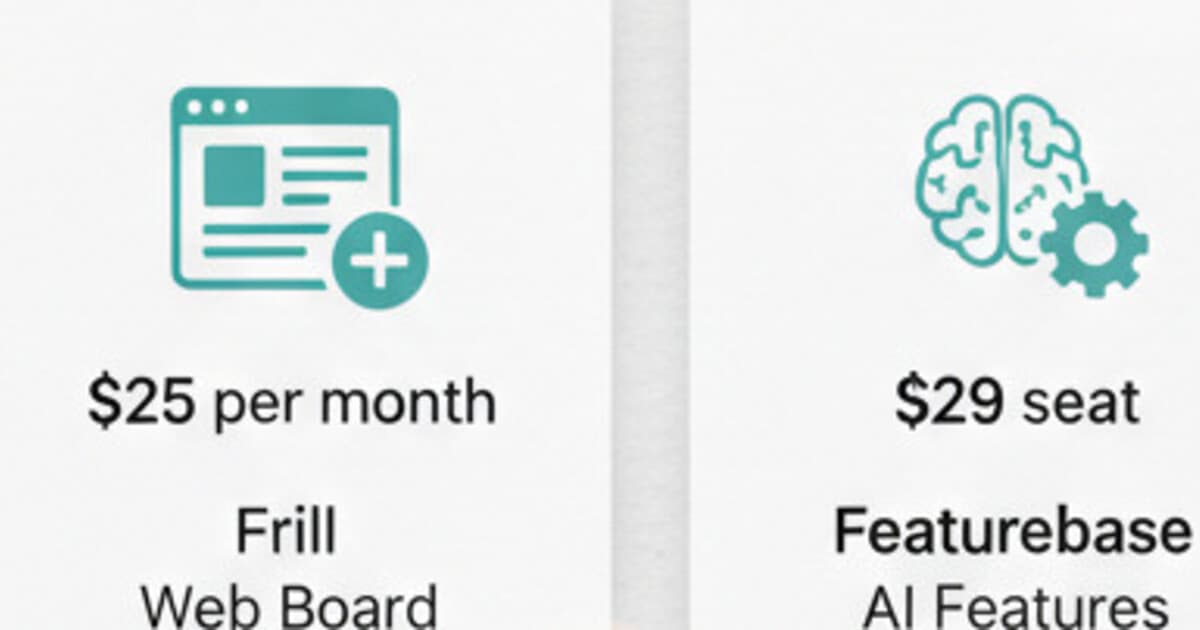
The cheapest Canny alternatives in 2026 are pick a feature ($0–$15/mo), Frill ($25/mo, 50-idea cap on Startup), Featurebase (from $29/seat/mo), and Fider (free, self-hosted). All four cover the core loop: submit requests, vote, track status. For Flutter apps, pick a feature is the only native SDK option. For web apps, Frill and Featurebase are the closest Canny-style replacements.
Why Canny Starts at $79/Month (and Who That Price Makes Sense For)
Canny's $79/month Starter tier bundles features that genuinely matter for mid-market SaaS teams: unlimited seats, Jira and Linear integrations, changelog publishing, and role-based access control. That's a reasonable bundle for a 10-person product org running a real roadmap process.
For a solo founder six months into launch with 300 users and maybe 40 feature requests, you're buying infrastructure you won't touch. The product targets a different buyer.
Canny also has no native mobile SDK. Flutter developers who try Canny end up embedding the portal in a webview or redirecting users to a separate domain. That friction tends to show in drop-off rates.
The 2026 pricing landscape for cheap Canny alternatives falls into three categories. First, Flutter-native SDKs like pick a feature, built for mobile developers who want in-app feature requests without a webview detour. Second, affordable web portals like Frill and Featurebase, which offer a Canny-style board at $25–$29/month. Third, open-source self-hosted tools like Fider, which cost nothing beyond server hosting fees. Indie developers who pay SaaS bills out of pocket consistently choose from these three categories rather than paying Canny's $79/month entry price. The decision comes down to three factors: whether your app is mobile or web, how many feature requests you expect per month, and how much infrastructure management you're willing to take on. Most early-stage indie products need the basics: collect, vote, triage. Canny's integrations, changelogs, and multi-user workflows are additions you layer in once you have the team and the budget to justify them.
For a direct head-to-head on features and pricing, Canny vs pick a feature walks through both tools in detail.
The Best Cheap Canny Alternatives in 2026
pick a feature — $0 to $15/month
pick a feature is a Flutter SDK plus cloud dashboard. Initialize it in one line of Dart with PickAFeature.initialize, pass your API key, and three pre-built widgets are ready to launch: a full-screen board, a dialog modal, or a bottom sheet. Users submit requests, upvote existing ones (one vote per device), and leave comments. The dashboard shows everything, and you walk each request through a six-step status workflow from pending to completed.
Pricing:
- Free: 1 project, 10 requests, no card required
- Starter: $5/month (3 projects, unlimited requests)
- Unlimited: $15/month (unlimited projects, unlimited requests)
Where it wins: native Flutter integration. The widget lives inside your app, themed to match it, with no webview redirect. Users see a request board that looks like part of your product rather than a third-party iframe bolted on. No other tool in this roundup offers that for Flutter developers.
The free tier is real — not a 14-day trial. Most indie apps stay on free for 60–90 days while verifying that users actually engage with the board before upgrading.
Where it doesn't fit: pick a feature is built for Flutter. Web apps have no SDK to integrate. There's also no public-facing roadmap page users can browse outside the app.
Frill — $25/month (Startup tier)
Frill is a web-first feature voting board with a clean interface. Users land on a board, submit ideas, upvote, and watch status updates come through. You manage everything from the Frill dashboard. Setup takes under an hour with no SDK required.
The Startup plan at $25/month is the entry point. One real constraint: it caps idea submissions at 50. For a product with engaged users, that fills up faster than expected.
Where it wins: polished out-of-the-box UI, fast setup, solid for web apps where a public voting board is the right experience.
Where it doesn't fit: the 50-idea cap bites early-stage products that get traction. And like all web-first tools here, there's no native mobile SDK.
For the full comparison, Frill vs pick a feature covers what each does well.
Featurebase — from $29/seat/month
Featurebase started as a Canny competitor and has since wired in AI features for request clustering and duplicate detection. The Growth tier starts at $29 per seat per month. A 3-person team pays $87/month before any discounts, which starts to approach Canny's territory.
Per-seat pricing means your cost scales with your team size, not your usage. For solo founders, $29/month is the cheaper choice. For small teams of 3 or more, the gap narrows.
The AI clustering matters if your app generates hundreds of requests weekly. For products with 40–100 active requests, it's overhead you're paying for without using.
Where it wins: the most feature-complete web-first alternative in this roundup; good for teams moving past the very early stage.
Where it doesn't fit: per-seat pricing punishes small teams who want multiple people reviewing requests.
Featurebase vs pick a feature goes deeper on the full feature breakdown.
Fider — Free (self-hosted open source)
Fider is open source. You host it yourself on a VPS or container service. Server costs typically run $5–$10/month on Fly.io or Digital Ocean. No per-seat fees, no usage caps, no SaaS bill.
The UI is clean and functional: users submit and vote on requests, you moderate from the admin panel and update statuses. Core workflow is solid.
Where it wins: genuinely free for teams comfortable with infrastructure. You own the data and the domain.
Where it doesn't fit: setup takes a few hours and updates need attention. If you'd rather ship features than manage servers, the maintenance overhead probably isn't worth the savings over $5/month.
Fider vs pick a feature covers the self-hosted tradeoff in detail.
Which Cheap Canny Alternative Actually Fits Your Situation?
A quick guide based on what actually matters for most indie developers:
Building a Flutter app: pick a feature. Native SDK, in-app widgets, free to validate, $5/month once you need more than 10 requests. No other option here runs natively inside a Flutter app.
Building a web app with low request volume: Frill at $25/month. Clean, fast setup, no code integration needed. Watch the 50-idea cap.
Building a web app with a growing team: Featurebase. Better suited for multi-person review workflows and higher request volumes, though per-seat pricing stacks up at 3+ seats.
Want free and willing to self-host: Fider. No ongoing SaaS fees, solid core, just needs a server and occasional maintenance.
If you're still weighing build-your-own against paying for a tool, Build vs Buy a Feature Request Tool breaks down the real development cost. The short version: 80–120 dev-hours to build a comparable system from scratch, plus ongoing maintenance.
How pick a feature Works Inside a Flutter App
pick a feature ships as the pickafeature package on pub.dev. Install it, call PickAFeature.initialize with your API key, and choose one of three entry points:
PickAFeatureScreenfor a full-screen feature boardPickAFeature.showDialogfor a modal overlayPickAFeature.showBottomSheetfor a slide-up panel
Each widget shows approved and completed requests. Users upvote (one vote per device UUID, anonymous-friendly for apps without sign-in), comment, and submit new requests with a title, description, and optional email. The theming system takes your primary color, secondary color, background, and border radius. The widget matches your app's visual style rather than announcing itself as a third-party plug-in.
On the dashboard, you get moderation tools to approve or reject incoming requests, email notifications when new requests come in, and the full status workflow: pending, under review, approved, in progress, planned, completed. Only approved and completed items surface in the widget, so users see a clean curated list.
The analytics tier scales with your plan: basic on Free, full on Starter, advanced on Unlimited. The $5/month Starter covers 3 projects with unlimited requests. That's $60 a year versus the 80–120 dev-hours you'd spend building equivalent UI and backend logic yourself.
Frequently Asked Questions
What's the cheapest Canny alternative in 2026?
pick a feature has the lowest entry price: free for 1 project and 10 feature requests, then $5/month for 3 projects with unlimited requests. That's 16x cheaper than Canny's $79/month entry tier. For Flutter apps, it also includes a native SDK that no other cheap alternative offers.
Is Featurebase cheaper than Canny?
Per seat, yes. Featurebase Growth starts at $29/seat/month versus Canny's flat $79/month team price. For a solo founder, Featurebase is cheaper. For a 3-person team paying $87/month, the gap closes fast. Check what each tool actually includes before deciding on price alone.
Can I use Fider for free instead of Canny?
Yes. Fider is open source and free to self-host. Your only cost is server hosting, typically $5–$10/month on a basic Fly.io or Digital Ocean instance. There are no per-seat fees or usage caps. The tradeoff is setup time on day one and ongoing maintenance when updates ship.
Is there a Canny alternative with a Flutter SDK?
pick a feature is built specifically for Flutter. It ships as a pub.dev package with three drop-in widgets for feature requests, voting, and comments. Frill, Featurebase, and Fider are all web-first tools with no native mobile SDK. If your app runs Flutter, pick a feature is the only option here that integrates natively.
What does Canny offer that cheap alternatives don't?
Canny's $79/month Starter includes Jira, Linear, and HubSpot integrations, changelog publishing, and role-based team access. For a funded product team of 5+ people managing a cross-functional roadmap, those features earn the price. For solo founders or two-person bootstraps, they usually go untouched.
Conclusion
Canny's price is fair for what it includes. For teams with Jira workflows, multi-user roadmap reviews, and CRM sync, $79/month makes sense. For indie developers paying out of pocket, it's a high entry point for what most early-stage products actually use.
The cheap alternatives in 2026 cover the core workflow at a fraction of the cost. pick a feature at $0–$15/month for Flutter apps, with a native SDK that no other tool here matches. Frill at $25/month for simple web boards with minimal setup. Featurebase at $29/seat for growing teams. Fider for free if you're comfortable with self-hosting.
If you're building a Flutter app and want feature requests without building the UI yourself, start with pick a feature's free tier at pickafeature.com. One line of Dart, no credit card, and you'll know within a week whether your users engage with it.