 pick a feature
Open Source Canny Alternatives in 2026: Fider, Astuto, and More
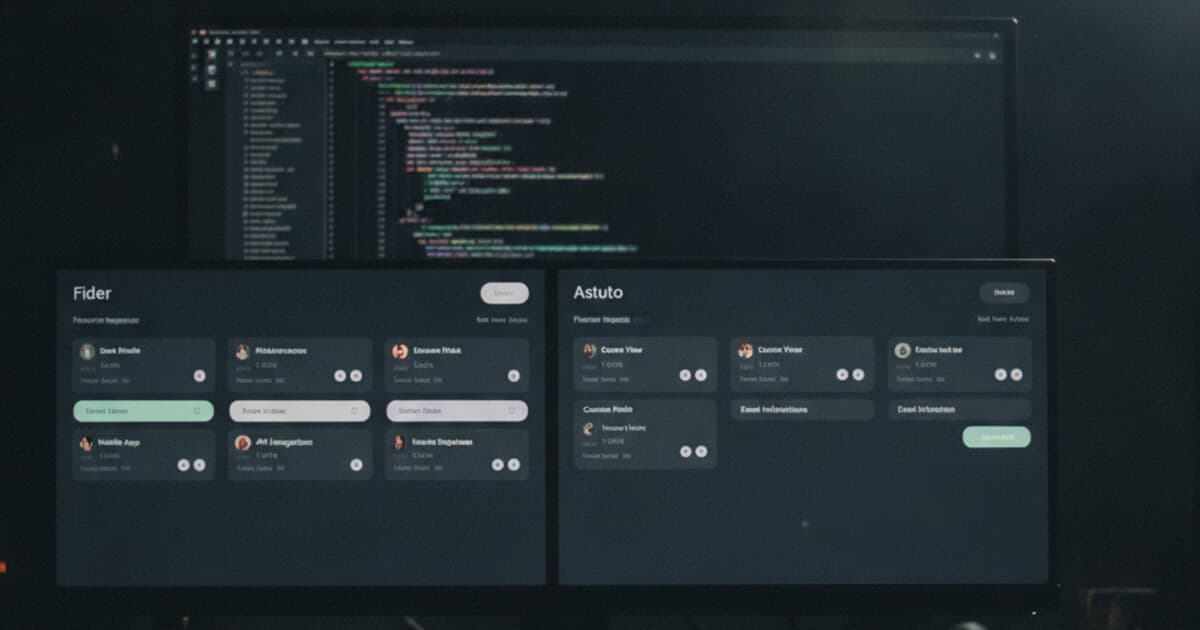
Canny starts at $79 a month. For a solo founder validating an idea, that's a line item you cut. So people go looking for open source Canny alternatives: self-hosted tools that handle voting and status tracking without the subscription.
There are two real options worth your time: Fider and Astuto. Both are open source, both run on Docker, and both give users a place to submit and vote on feature requests.
Neither is a perfect drop-in replacement for Canny, and neither has a mobile SDK. But if your users are on the web and you want zero licensing costs, they're solid starting points.
This article breaks down both tools honestly, covers what self-hosting actually costs in time and money, and explains when a managed tool makes more sense than the DIY route.
The best open source Canny alternatives in 2026 are Fider and Astuto. Fider is the more mature pick, built in Go, with voting and status tracking baked in. Astuto is newer with a cleaner UI and adds roadmap and changelog views. Both need a VPS and Docker. For Flutter apps, pick a feature is a managed SDK at $5/month.
What "Open Source Canny Alternative" Actually Means
The phrase gets searched for two different reasons.
Some teams want data control. GDPR compliance, a legal requirement, or just a preference to keep user data on their own servers. Self-hosting solves this cleanly.
Other teams want to avoid the subscription bill. They see Canny at $79/month and assume "open source" means free. That's worth unpacking before you commit.
Self-hosting means owning the VPS, the database, the SSL certificate, and the uptime. A Hetzner CX21 runs about $6 a month; DigitalOcean's Basic Droplet is $6-12. Setup takes 2-4 hours if you know Docker.
After that initial setup, you're responsible for updates, backups, and debugging when something breaks. That's manageable for a technical team with sysadmin capacity, but it adds up. If you bill your time at $100/hour, even one hour of server maintenance per month equals $100 in real cost.
The economics flip quickly compared to a $5-10/month managed tool. Self-hosting makes practical sense when data residency is a hard requirement, your team can absorb the ops work without slowing the product, and the licensing savings are material to your budget. If all three conditions apply, Fider and Astuto are both worth running.
Both tools cover the core requirements: user submission, voting, and status tracking. Where they differ is in UI quality, community maturity, and secondary features like changelogs and roadmap pages.
Fider: The Most Mature Self-Hosted Option
Fider (fider.io) has been around since 2017. It's built in Go with a React frontend, runs on PostgreSQL, and ships as a Docker Compose stack. Of all the open source feature-voting tools, Fider has the most production deployments and the largest community of self-hosters sharing configs and troubleshooting fixes.
The core feature set covers what Canny's basic tier does: users submit requests, vote, comment, and filter by status. You manage everything through a web admin panel. Status options are open, started, planned, completed, declined, and duplicate.
Fider also supports custom OAuth providers (so users can sign in with Google or your own auth system), email notifications for new requests, and basic tagging. The codebase is MIT-licensed and actively maintained. The GitHub repo gets regular commits and issues are addressed promptly.
Setup: Docker Compose with two services: the Fider app and PostgreSQL. You configure environment variables for your database, email provider, and domain. Most developers get a working instance in 2-3 hours.
Where Fider works well: Public web boards for SaaS products with web or desktop users. Teams already running Docker who can absorb one more container. Founders who want a community-tested tool with years of production use behind it.
Where Fider falls short: The UI looks dated. It's clean and functional, but the design language is circa 2019. If your board is public-facing, it may not match your brand.
There's also no mobile SDK. Your Flutter users have to tap out of your app into a browser to submit feedback, and participation drops sharply at that friction point. Our Fider vs pick a feature comparison goes deeper on where each tool fits.
Astuto: Cleaner UI, More Modern Stack
Astuto (astuto.io) is the newer alternative, built on Ruby on Rails and PostgreSQL. The UI is noticeably cleaner than Fider's. If you care about what your public feature board looks like to users, Astuto presents better out of the box.
Beyond the UI, Astuto adds two features Fider doesn't have: a public roadmap view and a changelog. Users can see what's coming and what you've already shipped, not just a list of pending requests. For teams that ship frequently and want to close the feedback loop visibly, that's a useful addition.
Setup follows the same Docker Compose pattern as Fider. You configure environment variables for Rails and PostgreSQL. If you've deployed a Rails app before, it's familiar ground.
Where Astuto works well: Public-facing boards where a polished UI matters. Teams that ship frequently and want a changelog built in. Product managers who want roadmap transparency without setting up a separate tool.
Where Astuto falls short: It's less battle-tested than Fider. The GitHub community is smaller, meaning fewer documented production setups to reference when something breaks. The project is active, but it's earlier-stage.
Same mobile gap applies: no Flutter SDK, no React Native SDK, browser only.
Other Open Source Canny Alternatives Worth Knowing
suggest_a_feature shows up in pub.dev search results for Flutter developers. It's a Flutter UI package, but it's bring-your-own-Firestore: you set up your own Firebase backend, write your own data schema, and build your own admin interface. There's no managed dashboard, no moderation tools, no email notifications out of the box.
It's a UI widget wired to raw Firestore, not a finished product.
Formbricks is open source and covers surveys, NPS, and in-app feedback forms. That's a different category from feature-request voting boards.
If you need user research tooling, Formbricks is worth a look. If you need voting and status tracking, it's not the right fit.
Roadmap.space appears in this search but it's not open source. It's a hosted SaaS at a lower price than Canny. Reasonable if cost is the only driver, but it doesn't satisfy a self-hosting requirement.
When a Managed Tool Beats Self-Hosting
Self-hosting Fider or Astuto makes sense when data control is a hard requirement, your team has infrastructure capacity, and you want to own the full stack.
For most indie developers and small Flutter teams, none of those conditions apply. You're building the product. Every hour on VPS maintenance is an hour away from what actually grows the app.
For Flutter apps specifically, Fider and Astuto share the same structural gap: no in-app SDK. Users vote in a browser, not inside your Flutter app. Users who have to leave an app to request a feature usually don't bother.
pick a feature fills that gap. It's a Flutter SDK plus cloud dashboard built specifically for in-app feature requests and voting. The widget renders natively in your app, so users browse, vote, and submit without leaving.
Getting started takes three lines of code:
await PickAFeature.initialize(apiKey: 'your-api-key');
Then show the widget wherever it fits your flow:
PickAFeature.showBottomSheet(context);
Three widget formats ship with the SDK: full screen, dialog, and bottom sheet. All support theming to match your app's colors, and custom copy for the title, subtitle, and submit button.
Pricing: the free tier covers 1 project and 10 feature requests with no credit card required. Starter is $5/month for 3 projects with unlimited requests. Unlimited is $15/month for unlimited projects and requests.
Canny Pro is $79/month. "Free" self-hosting runs $6/month in server fees plus setup and maintenance time. At $5/month, pick a feature skips the sysadmin work entirely and gives you a Flutter-native widget your mobile users actually use.
For a full pricing breakdown across tools, see Cheap Canny Alternatives in 2026.
The dashboard handles moderation, status updates, email notifications for new requests, and analytics. The status workflow covers pending, under review, approved, in progress, planned, and completed. Only approved and completed requests show in the widget, so you control what users see.
Frequently Asked Questions
Is Fider truly free to use?
Fider is MIT-licensed and free to download and run. Running it costs $5-10/month for a VPS on Hetzner or DigitalOcean, plus your domain and SSL. Plan on 2-4 hours of initial setup and occasional time for updates when new versions release.
What's the difference between Fider and Astuto?
Fider is more mature, written in Go, with a larger community of documented production deployments. Astuto is newer with a cleaner UI and includes a public roadmap and changelog that Fider doesn't offer. Both use PostgreSQL and Docker Compose, and if reliability matters more than UI polish, Fider is the safer pick.
Do any open source Canny alternatives have a Flutter SDK?
No managed open source tool has a Flutter-native SDK. suggest_a_feature on pub.dev offers a Flutter UI widget, but you must supply your own Firestore backend. pick a feature is a complete managed solution (Flutter SDK, cloud backend, dashboard) that starts free and costs $5/month for unlimited requests.
Can I embed Fider or Astuto inside a mobile app?
Neither tool has a native Flutter, React Native, iOS, or Android SDK. Both serve a web board in a browser, so mobile users have to leave your app to submit or vote. For in-app voting inside a Flutter app, you need a tool with an actual Flutter SDK.
Is pick a feature open source?
pick a feature is commercial SaaS, not open source, with a free tier covering 1 project and 10 requests and paid plans from $5/month. The pickafeature package is published on pub.dev. If data residency matters, the apiBaseUrl override lets you point requests at your own backend.
For Flutter teams building apps where users collect feedback inside the product, pick a feature is worth trying on the free tier. The free plan covers a real project with no time limit, and setup takes under an hour.