 pick a feature
Feedbear vs pick a feature: Honest Comparison (2026)
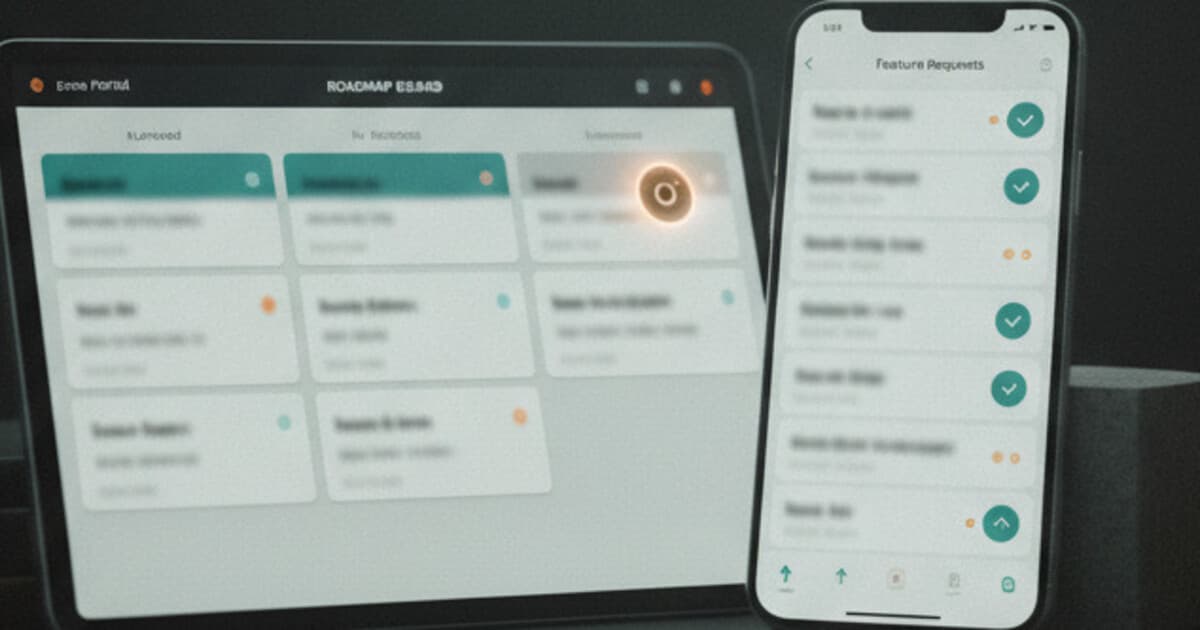
You've decided your Flutter app needs a way to collect feature requests. Two names come up: Feedbear and pick a feature. Both let users submit and upvote ideas, but beyond that, they're quite different products built for different stacks.
Feedbear is a web-first feedback suite with changelog and public roadmap pages. pick a feature is a Flutter SDK with a cloud dashboard. Depending on your stack and budget, the right choice becomes clear quickly.
This feedbear vs pick a feature comparison covers what each tool does, where the real differences live, and which one makes sense for your situation.
Feedbear is a web-based feedback portal with changelog and roadmap features, starting at $49/mo. pick a feature is a Flutter SDK that embeds natively in your app, starting free and scaling to $5/mo. Flutter developers should choose pick a feature; web SaaS teams that need a public roadmap and changelog should choose Feedbear.
What Feedbear Does
Feedbear is a hosted feedback board. You set up a board at a subdomain, share the link with users, or embed a JavaScript widget on your marketing site or web app. Users submit ideas, upvote existing ones, and track requests through status updates.
Beyond the basics, Feedbear includes:
- A public roadmap with planned, in progress, and shipped lanes
- A changelog for announcing updates and new features
- Slack and Jira integrations (paid plans)
- Email notifications to voters when a request's status changes
Feedbear covers the full feedback lifecycle: collect requests, prioritize them on the roadmap, ship the feature, announce it via changelog. For web SaaS teams with a Slack workspace and Jira board, it plugs in cleanly.
Pricing starts at $49/mo for the Startup plan. There's no permanently free tier, just a trial period. For a team shipping a web product with real MRR, that number works. For a solo dev with a side project, it's a steep recurring line item.
The platform limit is real: Feedbear's widget is JavaScript. There's no native Flutter SDK. Flutter apps that use Feedbear have to open a browser tab or WebView when a user taps "give feedback." That's friction most mobile users notice, and you can't theme it to match your app.
The typical Feedbear customer is a product manager or founder running a web SaaS with an established user base. They're fielding feature requests in Slack and want one place to route them. Feedbear earns that use case well.
What pick a feature Does
pick a feature ships as a Flutter package on pub.dev. You add the dependency, call PickAFeature.initialize('your_api_key') in your main function, and the feedback UI is wired directly into your app. Users see a native screen, dialog, or bottom sheet with approved feature requests, upvote buttons, and a form to submit new ideas.
The backend is a cloud dashboard where you moderate incoming requests, move them through a 6-status workflow (pending, under review, approved, in progress, planned, completed), and review analytics. Anonymous users get a device UUID automatically, so you don't have to force sign-in to capture votes.
Feedback collection tools fall into 2 categories: hosted portals you link users to, and embedded SDKs that live inside the app. Feedbear is a hosted portal; its JavaScript widget works for web products, but Flutter apps require opening an external browser tab to display the board.
Standalone portals typically see 5-10% participation from active users because the path from in-app trigger to feedback submission crosses browser boundaries. Embedded SDK widgets, where the feedback UI renders natively, see participation closer to 25-40% in comparable deployments.
Feedbear charges $49/mo on its Startup plan for a web-first team. pick a feature's Starter plan covers 3 Flutter projects with unlimited feature requests for $5/mo, or $60 annually. That's a $528/year difference for indie developers paying out of pocket.
The architecture gap matters most for Flutter teams who can't use a JS-only widget natively. For cross-platform teams deploying to iOS, Android, web, and macOS from one Flutter codebase, a native SDK reduces the integration surface to a single package and a single API key.
Honest limitations: pick a feature doesn't have a public roadmap URL, a changelog module, Slack integration, or Jira sync. Feature requests and their statuses live inside the SDK widget. The free tier (1 project, 10 requests, no card) exists to let you test fit before committing.
Feedbear vs pick a feature: Feature Comparison
| Feedbear | pick a feature | |
|---|---|---|
| Platform | Web SaaS / JS widget | Flutter SDK (iOS, Android, web, macOS) |
| Flutter native embed | No (browser redirect) | Yes |
| Public roadmap page | Yes | No |
| Changelog | Yes | No |
| Slack integration | Yes (paid) | No |
| Jira integration | Yes (paid) | No |
| Free tier | Trial only | Yes (1 project, 10 requests) |
| Starting price | $49/mo | Free / $5/mo Starter |
| Anonymous voting | Yes | Yes (device UUID) |
| Status workflow | Yes | Yes (6 statuses) |
| Multi-user accounts | Yes | No (single-owner) |
| Self-host backend | No | SDK supports custom apiBaseUrl |
pick a feature trades changelog, public roadmap, and third-party integrations for native Flutter embed and a price built for solo founders. Whether that trade makes sense depends on what your product actually needs right now.
Pricing: What You Actually Pay
Feedbear's Startup plan is $49/mo, which works out to $588/year. There's no permanently free option. That's a reasonable budget for a team with subscription MRR. For a developer paying out of pocket on a side project, it's one of the heavier monthly commitments in the stack.
pick a feature's tiers:
- Free: 1 project, 10 feature requests, basic analytics, no card required
- Starter ($5/mo or $50/yr): 3 projects, unlimited requests, user comments, full analytics
- Unlimited ($15/mo or $150/yr): Unlimited projects, advanced analytics
The free tier is real. Most indie apps stay free for 60-90 days to test whether feature voting actually influences product decisions. When the 10-request limit shows up, $5/mo removes it.
For a broader look at how these prices compare across the full market, the cheap Canny alternative guide maps out every major tool from free to enterprise-priced.
Which Tool Should You Choose?
Choose Feedbear if:
- Your product runs in a browser
- Your users expect a public roadmap page they can bookmark and share
- You post changelogs to communicate shipped features
- Your team uses Slack or Jira and wants feedback routed there automatically
Choose pick a feature if:
- Your app is built with Flutter
- You want feedback collection that stays inside the app, with no browser redirect
- You're an indie developer or small team paying out of pocket
- Feature request voting is all you need right now (changelog and roadmap can come later)
Both tools handle the core job. The decision is really about stack (Flutter vs web) and scope (voting alone vs voting plus changelog plus roadmap plus integrations).
If you're still comparing multiple tools at once, the best feature request tools in 2026 guide covers Feedbear, pick a feature, Canny, Featurebase, and the rest of the field side by side.
Frequently Asked Questions
Does Feedbear have a Flutter SDK?
No. Feedbear is a web-based feedback portal with a JavaScript widget. Flutter apps need to open an external browser tab or WebView to display the Feedbear board. pick a feature embeds directly inside your Flutter app as a native screen, dialog, or bottom sheet. No browser redirect involved.
Is pick a feature free to use?
Yes. pick a feature has a genuine free tier: 1 project, 10 feature requests, no credit card required. Most indie apps stay free for the first 60-90 days while validating fit. When you hit the limits, the Starter plan is $5/mo for unlimited requests across 3 projects.
Which is better for indie hackers?
pick a feature is the better fit for most indie hackers. At $5/mo (vs Feedbear's $49/mo) and with a native Flutter SDK that keeps users in-app, it's priced and built around the solo founder use case. Feedbear wins if your product is web-first and your users expect a public roadmap page.
Does pick a feature have a public roadmap page?
No. Feature requests and statuses live inside the SDK widget. There's no shareable URL your users can visit directly. If a public roadmap page is a requirement, Feedbear or Canny are better fits for that specific need.
If your app is on Flutter and you want feature request voting that keeps users inside the app, try pick a feature. The free tier gets you started today: 1 project, no card, no trial expiry. Set it up at pickafeature.com.