 pick a feature
Feature Voting Board: Setup, Tools, and Best Practices
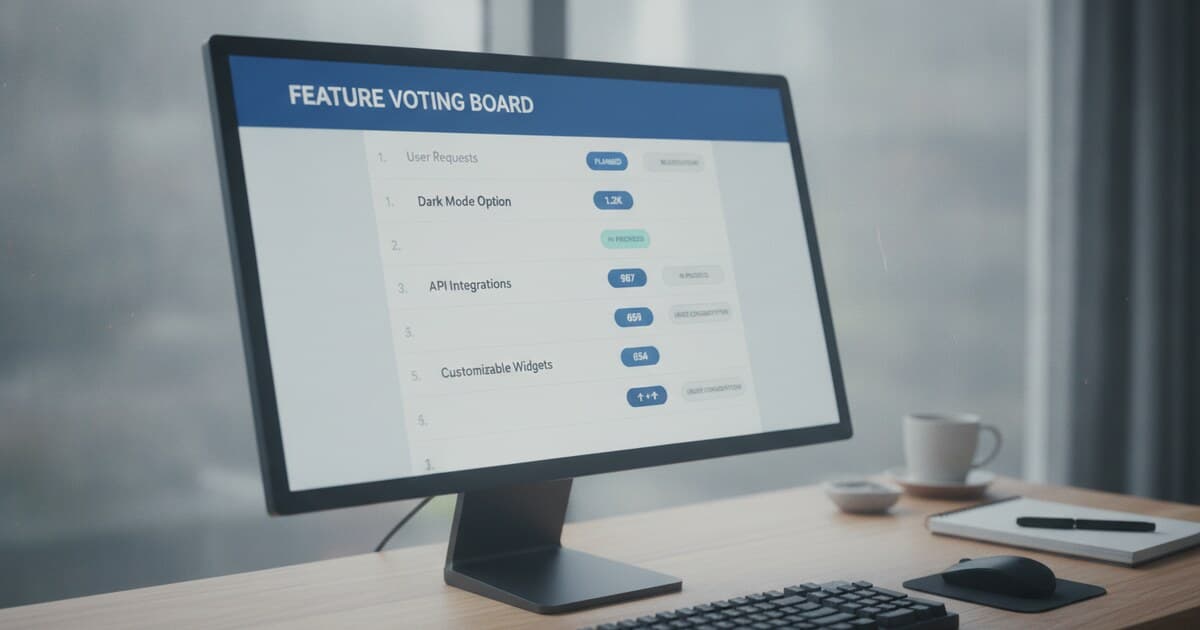
Building the wrong feature wastes months. The right feature can lock in users who were already half-gone. The gap between the two usually comes down to one thing: knowing which requests represent genuine patterns versus one vocal user typing loudly into your support inbox.
A feature voting board solves that. Users submit ideas, vote on the ones they care about, and leave comments explaining their actual use case. You get a ranked list of real demand instead of a stack of Slack messages from whoever speaks up first.
This guide covers what a feature voting board is, how it works, where teams get it wrong, and how to pick the right tool for your situation.
A feature voting board is a public page where users submit feature requests and upvote the ones they want most. Teams use the ranked list to spot genuine demand patterns before committing engineering resources. Most boards also support status labels so users know when their request moves to planned, in progress, or completed.
What Is a Feature Voting Board?
A feature voting board collects and ranks user requests by upvote count. Users can see what others have already requested, add their vote to an existing idea instead of filing a duplicate, and leave comments explaining their specific use case.
The board removes the need to manually triage every piece of incoming feedback. Once it's running, your users organize the list for you. You focus on deciding what to build, not consolidating 200 separate emails into themes.
Feature voting boards emerged as part of the product-led growth movement, with early tools like UserVoice launching in 2008 and Canny following in 2014. A board captures three core signals per request: vote count (how many users want it), comment thread (context and use cases), and voter identity (which customer segments care). The format gives product teams a shared prioritization reference that's always current. The key architecture choice is where the board lives: a hosted page you share via URL, an embedded web widget using a script tag, or a native mobile SDK inside the app itself. Hosted boards take under 10 minutes to set up with no code required. Embedded widgets add 15-30 minutes of integration work. Native mobile SDKs require a full installation but put the board inside the app experience, which typically increases submission rates because users don't leave the context they're already in.
For a deeper look at the hosted board format specifically, see hosted feedback board options compared.
How a Feature Voting Board Actually Works
The basic flow: a user visits your board, searches for their idea, and either upvotes an existing request or submits a new one with a title and description.
On your end, the dashboard shows every request with its vote count, submitter details, and comment thread. You can approve requests to make them visible to other voters, reject low-quality submissions, and update statuses as your team moves through the work.
When you mark something completed, voters get an email notification. That closed loop is what keeps users coming back to submit more. A board without status updates turns into a graveyard users stop trusting within a few months.
Voting is typically capped at one per user per request, using either a login, a device identifier, or a browser session. pick a feature uses device UUIDs for anonymous users, so people who aren't signed in still can't vote more than once. This keeps the counts honest.
What Most Teams Get Wrong
Treating votes as a democracy. High vote count means the problem is widespread, not "build this next." A 200-vote request from your free tier might matter less than a 30-vote request from the accounts paying $500/month. Weight votes by customer segment or revenue tier before drawing conclusions.
Ignoring the voters. Votes without context are signals. Comments and follow-up questions are insight. The teams who get the most out of voting boards reply to top-requested items with one question: "What would you use this for?" That question regularly reshapes how a feature gets scoped.
Not closing the loop. Users who submit requests and never hear back stop submitting. Set statuses as you triage. Even "under review" tells the user their request was read.
Lumping all feedback together. If you're mixing bug reports, feature requests, and general complaints in the same bucket, the ranked list is noise. A dedicated feature voting board filters for a specific signal. Keep bugs in a bug tracker and keep feature requests in the voting board.
Feature Voting Board Tools: An Honest Comparison
Most tools in this space write their own comparison articles, which makes independent pricing data hard to find. Here's a straightforward breakdown of the options with verified pricing.
| Tool | Hosted board | In-app / mobile | Free tier | Paid from |
|---|---|---|---|---|
| pick a feature | pickafeature.com/b/slug | Flutter SDK + Web SDK | 1 project, 10 requests | $5/mo |
| Canny | Yes | No native SDK | 25 tracked users | $79/mo Pro |
| Featurebase | Yes | No native SDK | 1 seat | $29/seat/mo |
| Nolt | Yes | No native SDK | No free tier | $29/mo |
pick a feature starts at $5/month (Starter: 3 projects, unlimited requests) with a genuinely usable free tier: 1 project, 10 requests, no credit card required. It's the only tool in this table with a native Flutter SDK, so if you're building a mobile app, you can put the voting board directly inside your UI rather than linking out to a separate page. The web SDK covers React, Next.js, Vue, plain HTML, or any other web stack.
Canny is the most established tool in the category with the deepest integration ecosystem. The free tier caps at 25 tracked users, and the Pro tier at $79/month is a significant jump for solo founders. No mobile SDK means mobile users hit a browser page instead of an in-app experience.
Featurebase has shifted toward an AI customer support suite over the past year. The voting board is still there, but it's no longer the product's center of gravity. Per-seat pricing at $29/month can scale awkwardly as your team grows.
Nolt is clean and focused with a $29/month flat rate and no user-tracking caps. Good option if you want a simple web board and pricing predictability. No free tier and no mobile SDK.
For a full pricing breakdown across 9 tools in the category, see the feedback tool pricing comparison.
Setting Up a Feature Voting Board in 10 Minutes
The fastest path: use pick a feature's hosted board.
- Sign up at pickafeature.com. No credit card needed on the free tier.
- Create a project and give it a name.
- Your board URL goes live immediately at
pickafeature.com/b/your-slug. Drop this link in your app's Help menu, email footer, or in-app onboarding. - If you want the board inside your Flutter app instead of as a browser link: add the package (
flutter pub add pickafeature), callPickAFeature.initialize(apiKey: 'your-key')in main.dart, then open the board withPickAFeature.showBottomSheet(context)from any button in your UI.
For web apps, drop the script tag on the page, optionally enable the floating "Feedback" launcher button, or embed the board inline on a Roadmap page using data-container. For the full embed walkthrough, see how to embed a feedback board on your website.
Web votes and Flutter votes add up on the same board. A user who submits through the Flutter widget and a user who visits the hosted URL both show up in the same dashboard, with platform breakdowns so you can see where engagement is coming from.
Frequently Asked Questions
What's the difference between a feature voting board and a feedback form? A feedback form collects one response at a time and sends it to an inbox. A voting board shows users what others have already requested, so they can add a vote instead of filing a duplicate. You end up with ranked demand data rather than hundreds of unstructured entries with no way to spot patterns.
Does feature voting lead to building by committee? Only if you treat votes as a mandate. Votes show you what's popular, not what to build. Use them as a demand signal alongside revenue context, strategic fit, and effort estimates. A 50-vote request from your highest-value accounts often outranks a 200-vote request from users who'd never upgrade.
How many users do you need before a feature voting board is useful? You can start seeing patterns with 50 to 100 active users. The ranked list won't give you statistically reliable prioritization at that scale, but it will surface themes you'd otherwise miss. Most teams set up the board early so data accumulates before they need to make harder product decisions.
Can I run a feature voting board inside a mobile app? Yes. pick a feature's Flutter SDK opens the board as a full-screen page, a dialog, or a bottom sheet from anywhere in your UI. For iOS, Android, React Native, or Kotlin Multiplatform apps without the Flutter SDK, you can open the hosted board URL in an in-app browser (SFSafariViewController on iOS, Chrome Custom Tabs on Android) with no additional setup.
A feature voting board won't make prioritization decisions for you, but it replaces guesswork with actual demand data. pick a feature's free tier gets you a hosted board live in under 10 minutes with no code and no card. If you're shipping a Flutter app, the SDK puts the board directly in your UI so users can submit without leaving the app.