 pick a feature
Best Feature Request Software in 2026: 7 Tools Compared
Picking feature request software sounds straightforward until you start comparing options. The category includes $0 self-hosted boards, $15/month Flutter SDKs, and enterprise platforms that cost more than a junior hire. Most comparison articles group them together without explaining which type actually fits your team.
This guide covers the 7 best feature request software tools in 2026, with real pricing and honest trade-offs for each.
The best feature request software in 2026 depends on your platform and budget. For Flutter apps, pick a feature ($0 to $15/mo) is the only SDK-native option with a managed backend. For web-first teams, Canny ($79/mo) and Featurebase ($29/seat/mo) are the mature choices. Free options include Fider (self-hosted) and pick a feature's free tier (1 project, 10 requests, no card).
What to Look for in Feature Request Software
Four criteria separate tools worth using from ones that create more work than they save.
Platform fit. Most feature request software is web-first: it gives you a separate portal URL that users have to visit to submit ideas. If you're building a mobile or Flutter app, a web portal adds friction. An SDK-based tool lives inside your app, so users can browse, vote, and submit without being redirected anywhere.
Pricing that matches your stage. The range is extreme: $0 on a self-hosted board to $16,000+/year for enterprise. Most indie apps don't need the high end for the first 12 to 18 months. A real free tier or a sub-$20/month plan covers the validation phase fine.
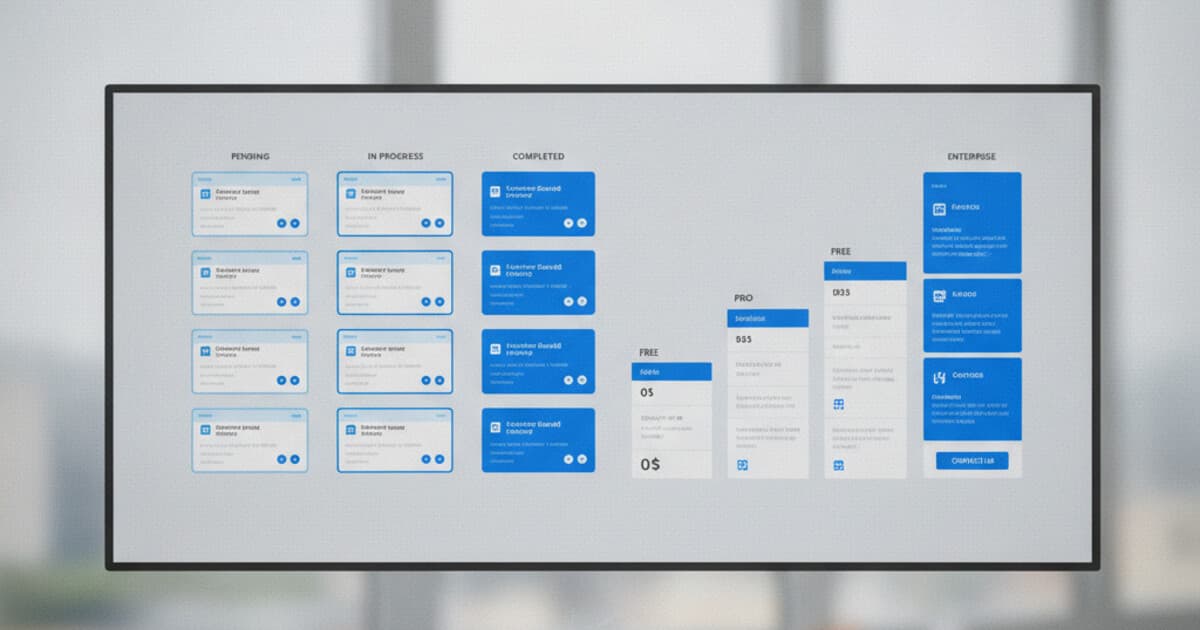
Status workflow. Users who submit a feature and hear nothing back will email you asking about it. A tool with visible statuses (pending, in progress, completed) answers those emails before they're written.
Setup speed. A tool that takes 3 days to configure is rarely deployed correctly. For Flutter devs, dropping in a pub.dev package beats setting up a web portal, customizing it, and hoping users find the external link.
Feature request software sits in a distinct category from bug trackers and crash reporting tools. The primary job is collecting user ideas, letting others vote on them, and giving the team a way to track each request from submission to completion. The core market spans three price tiers: enterprise platforms like UserVoice ($16,000+/year) and ProductBoard ($49/seat/mo) designed for product organizations with dedicated PMs and roadmap budgets; mid-market SaaS tools like Canny ($79/mo), Featurebase ($29/seat/mo), and Frill ($25/mo capped at 50 ideas) targeting web-first products with growing subscriber bases; and lightweight tools like pick a feature ($0 to $15/mo) and Fider (open source, free to self-host) sized for indie devs paying out of pocket. Flutter-app developers face a specific gap in this market: almost every mid-market option is web-only, so users have to leave the app to submit a feature request. That redirect typically reduces submission rates and creates a disconnected experience for apps where the rest of the UI is native.
pick a feature: Best Feature Request Software for Flutter Apps
Price: Free (1 project, 10 requests) / $5/mo Starter / $15/mo Unlimited
pick a feature is a Flutter SDK plus a cloud dashboard. You add one line of code, choose a widget style (full screen, dialog, or bottom sheet), and your users can browse, vote on, and submit feature requests from inside your app.
The status workflow runs from pending through under review, approved, in progress, planned, and completed. Only approved and completed requests appear in the widget, so users see a curated list rather than every half-formed idea that's ever come in.
Pricing is the other reason to pay attention here. The free tier is real: 1 project, 10 requests, no credit card, no expiry date. The $5/mo Starter covers 3 projects with unlimited requests. The $15/mo Unlimited tier removes all project and request limits. Against Canny's $79/mo entry price, that gap is hard to ignore.
Building the equivalent from scratch takes 80 to 120 dev-hours: custom UI, voting logic, a backend, moderation tooling, and status tracking. For most Flutter devs, the math points at using the SDK.
One honest limit: pick a feature doesn't have a public-facing roadmap URL. Feature requests live inside the app widget. If you need a shareable web page your users can visit independently, you'll need one of the web-first tools below.
Best for: Indie Flutter devs, side projects, bootstrapped SaaS founders. Not for: Web-only apps, teams that need Slack or Linear integrations.
Canny: Best for Web-First Growth Teams
Price: $79/mo Starter — no free tier beyond a limited trial
Canny is the category leader for web-first feature request management. The integrations are broad (Jira, Linear, Slack, Zendesk, GitHub), the changelog and roadmap features are solid, and the portal UI looks professional without much configuration.
The entry price is $79/mo. For a SaaS with paying customers and a small product team, that's justified. For a solo dev or early-stage project, it's a significant monthly commitment before you know what your feature request volume looks like.
For a full comparison of similar tools at lower price points, see the best Canny alternatives in 2026.
Best for: Web SaaS products with a dedicated team and an existing Jira or Slack stack. Not for: Flutter apps (web-first only), tight budgets.
Featurebase: Best for AI-Assisted Request Triage
Price: From $29/seat/mo — no free tier
Featurebase is Canny's most direct competitor and adds AI tools that Canny doesn't have: duplicate detection, sentiment analysis on comments, and request clustering. For teams processing dozens of submissions per week, those features save meaningful triage time.
The seat-based pricing model scales awkwardly for small teams. Two seats runs $58/mo before you've done anything — 4x the cost of pick a feature's Unlimited plan.
Best for: Small-to-medium web SaaS teams who want AI-assisted request triage. Not for: Solo founders, Flutter apps, anyone on a tight monthly budget.
Frill: Best Budget Web Portal
Price: $25/mo Startup (50 ideas cap) / $49/mo Business (unlimited)
Frill gives you a clean feature-request portal at a lower entry price than Canny or Featurebase. Setup is quick, and the UI is simple enough that most users figure out how to submit without any instruction.
The 50-idea cap on the Startup plan is a real constraint. If your app collects more than a handful of requests a month, you'll hit it. At $49/mo for Business, the price gap from Canny narrows enough that the choice becomes less obvious.
Best for: Web apps in early validation with moderate request volume. Not for: Flutter apps, high-volume request intake on the Startup plan.
Fider: Best Open Source Feature Request Software
Price: Free (self-hosted)
Fider is an open source, Go-based feature voting board. You run it on your own server, own your data entirely, and pay nothing beyond hosting costs. It's been actively maintained since 2017 and handles voting, statuses, and custom domains.
The trade-off is setup and maintenance time. Fider works well for developers comfortable with Docker and Postgres who have strong opinions about data ownership. For everyone else, the hours spent deploying and keeping it running offset the cost savings pretty quickly.
For Flutter devs: Fider is web-only, so you'd link to it from your app rather than embed it natively.
Best for: Developers who want full data control and are comfortable with self-hosting. Not for: Teams that want a managed service with minimal ops work.
Wiredash: Best Flutter Feedback Tool (Different Scope)
Price: Free up to 100k MAU
Wiredash is a Flutter SDK focused on in-app feedback, analytics, and CSAT surveys. It's on this list because Flutter devs frequently compare it with pick a feature when evaluating their options.
The key distinction: Wiredash doesn't have a feature request voting board or a status workflow. It handles user sentiment and bug capture, not feature idea management. If you want screenshot-based feedback and NPS scores, Wiredash fits that job. If you want users to browse a list of feature ideas, vote, and see what's in progress, it's the wrong tool for that.
Best for: Flutter apps that want in-app feedback surveys and analytics. Not for: Feature request collection, voting, or status-based request management.
UserVoice: Best for Enterprise Product Teams
Price: $16,000+/year
UserVoice is the enterprise end of this market. It includes deep integrations, role-based access control, custom reporting, and SSO. Most indie devs can stop at this entry entirely. It's sized for product organizations at companies with dedicated PMs, a customer success team, and a procurement process.
Best for: Mid-market and enterprise SaaS with large user bases and multiple product managers. Not for: Anyone whose tools budget comes out of their personal bank account.
Feature Request Software Pricing at a Glance
| Tool | Starting Price | Free Tier | Platform |
|---|---|---|---|
| pick a feature | $0 | Yes | Flutter SDK |
| Canny | $79/mo | No | Web portal |
| Featurebase | $29/seat/mo | No | Web portal |
| Frill | $25/mo | No | Web portal |
| Fider | Free | Yes (self-host) | Web portal |
| Wiredash | Free | Yes (100k MAU) | Flutter SDK |
| UserVoice | $16,000+/yr | No | Web portal |
How to Choose Feature Request Software for Your App
Platform is the most useful filter. If you're building on Flutter, you're choosing between pick a feature (voting plus status workflow) and Wiredash (feedback plus analytics). They're complementary tools in different categories rather than direct competitors.
If you're building a web product, Canny and Featurebase are the mature choices, with Frill as the budget step down and Fider for teams comfortable with self-hosting.
Budget is the second filter. Canny and Featurebase both require meaningful monthly spend before you've validated whether the tool fits your workflow. pick a feature and Fider are the only options with a usable free tier for projects in early validation.
For collecting feedback effectively once you've got a tool in place, see how to collect feature requests. For running the triage and prioritization process after requests start coming in, see how to manage feature requests.
Frequently Asked Questions
What is feature request software?
Feature request software collects improvement ideas from users, lets others vote on them, and gives you a way to track each request from submission through to completion. The core job is replacing scattered feedback channels (emails, app reviews, DMs, support tickets) with one place where both you and your users can see what's been requested and what's being worked on.
What's the cheapest feature request software with a real free tier?
Two tools have a genuinely free ongoing tier: Fider (self-hosted, no cost beyond hosting) and pick a feature (1 project, 10 requests, email notifications, moderation tools, no card required, no expiry date). Canny and Featurebase both offer trials but no permanent free tier. Wiredash is also free up to 100k MAU, but it covers feedback surveys rather than feature request voting.
Can I add feature requests to a Flutter app?
Yes. pick a feature is a pub.dev Flutter package that drops in a full-screen widget, dialog, or bottom sheet. After one-line initialization, users can browse approved requests, vote, and submit new ones without leaving your app. Wiredash is another Flutter SDK, but it focuses on in-app feedback surveys rather than voting and request tracking.
What's the difference between Canny and Featurebase?
Both are web portals for collecting and managing feature requests. Canny is the more established option with broader integrations (Slack, Jira, Linear, Zendesk, GitHub). Featurebase is newer and adds AI tools for duplicate detection and sentiment analysis on comments. Canny starts at $79/mo; Featurebase at $29/seat/mo. Neither has a permanent free tier.
Is there open source feature request software?
Fider is the most mature open source option. Written in Go with a React frontend, actively maintained since 2017, and self-hosted via Docker, it handles feature voting, statuses, and custom domains. Astuto is another self-hosted option built in Ruby on Rails. Both require server setup and ongoing maintenance, which can eat into the cost savings compared to a managed SaaS.
pick a feature is free to start at pickafeature.com. The SDK installs from pub.dev in one line, and the first project runs forever on the free tier. If your Flutter app doesn't have a way for users to submit and vote on feature requests yet, that's the fastest path to adding one.